Event industry trends are evolving fast. Budgets are tightening in some sectors and rising in others. Attendees expect more personalization and real-time communication than ever before. And leaders are demanding what they’ve always wanted but rarely received: clear, defensible ROI.
Across industries, the message is the same: the strategies that worked even three years ago won’t carry programs forward in 2026.
This pillar article gives you a high-level view of the biggest shifts shaping events this year and how event teams can adapt. To access the full research, including the nine “what’s out / what’s in” trend shifts, industry-specific plays, and detailed measurement frameworks, download the full report:
👉 Event Industry Trends 2025-26: What’s Out, What’s In, and How to Stay Ahead
The New Event Industry Trends Landscape: What’s Changing in 2026
Smaller Budgets? Not Exactly — Just Smarter Allocation
Most organizations aren’t cutting event budgets. They’re redistributing them. Leaders want every dollar to drive pipeline, applications, donations, membership, or mission outcomes — not just stage design or headcount.
Budgets are still healthy, but scrutiny is sharper. Planners who can connect spend directly to measurable outcomes will win support (and budget) faster.
The Rise of the Regional Event Portfolio
The mega-conference isn’t dead, but it’s no longer the centerpiece of most strategies or event industry trends.
Smaller, regional gatherings offer what attendees consistently say they want:
- More meaningful access to subject-matter experts
Easier travel - Interactive formats where they can participate, not just observe
- Authentic, local experiences
These “micro-events” produce deeper engagement at a fraction of the cost and are easier to personalize, measure, and scale.
For a deeper dive, read:
Small Events vs Large Events: Why Regional Strategies Win
AI Moves From Trend to Infrastructure
AI is now woven throughout the event lifecycle, but not in the “let AI do everything” way many expected in event industry trends.
The winning teams use AI to accelerate personalization, drafts, segmentation, and analysis while preserving a human touch in voice, tone, and relationship-building.
AI is now:
- Drafting content (agendas, abstracts, summaries)
- Personalizing outreach
- Scoring attendees
- Predicting interest and engagement
- Supporting real-time recommendations
The teams seeing the biggest lift are the ones who use AI to scale human strategy, not replace it.
Deep dive resource:
The Ultimate Guide to AI-Driven Event Marketing Personalization
From Batch-and-Blast Email to Real-Time Messaging
Generic email blasts are no longer enough to move attendees from registration to attendance to action.
Organizations are shifting to:
- SMS
- RCS
- In-app notifications
These channels cut through inbox clutter and deliver 10x higher engagement, making them essential for:
- Reducing no-shows
- Clearing waitlists
- Driving session attendance
- Accelerating follow-up actions
More in our related guide:
Best Event Management Platforms for SMS Alerts in 2025
Compliance, Accessibility & First-Party Data Are Now Foundational
For years, marketing teams depended on third-party cookies and external trackers to understand who their audience was and what they cared about.
But today:
- Browsers block third-party cookies by default (Safari, Firefox, and now Chrome).
- Privacy regulations (GDPR, CCPA, FERPA, HIPAA) restrict how organizations can collect, share, or sell personal data.
- Users increasingly opt out of being tracked across the web.
This means third-party data is becoming incomplete, inconsistent, and—very soon—unusable. It’s no longer a stable foundation for marketing, engagement, or measurement.
Three major forces now define the future of event data and operations in event industry trends:
1. Events generate some of the richest, highest-intent first-party data of all
Events generate high-quality, consented data that organizations truly own.
When someone registers or attends an event—whether a campus program, training, orientation, webinar, conference, or community gathering—they voluntarily share:
- Who they are
- What they care about
- What sessions they choose
- Whether they show up
- How engaged they were
- What actions they took afterward
This is identity + intent + engagement in a single interaction. No third-party tracker can match that depth, reliability, or compliance.
That’s why events are now treated as data engines, not just marketing activities.
2. Payments, privacy, and security standards are tightening
As events collect more sensitive data, from registrations to payments, security expectations increase. Organizations must now navigate:
- Stricter consent and privacy requirements
- Higher security and authentication standards (including new PCI DSS mandates)
- Growing scrutiny around data storage, access, and monitoring
Event payment workflows, in particular, must meet stronger future-dated compliance requirements. Every transaction needs to be secure, auditable, and fully trusted.
3. Accessibility is now a measurable event KPI
Where planners once focused on statements of inclusion, today’s events must demonstrate accessibility in practice. That includes:
- Accessible registration pages
- Clear accommodations workflows
- Captioning and transcripts
- Alt text and screen-reader–friendly design
- Inclusive session formats
Accessibility isn’t just about compliance — it directly improves attendance, satisfaction, and trust. In 2026 and beyond, it’s a measurable indicator of event quality and organizational values.
The Tech Stack Reckoning Is Here
Events used to run on a patchwork of point solutions and spreadsheets. Not anymore.
In 2026, teams are consolidating:
- Registration
- Payments
- Messaging
- Compliance
- Check-in
- Reporting
…into fewer, fully integrated platforms, often directly within Salesforce.
This shift reduces friction, eliminates manual exports, and gives leadership measurable ROI tied directly to pipeline, deposits, gifts, or citizen engagement.
To understand whether you need a dedicated Event Technologist or simply a smarter stack, read:
Do I Need an Event Technologist or Just Smarter Event Tech?
Interactive Events Become the New ROI Engine
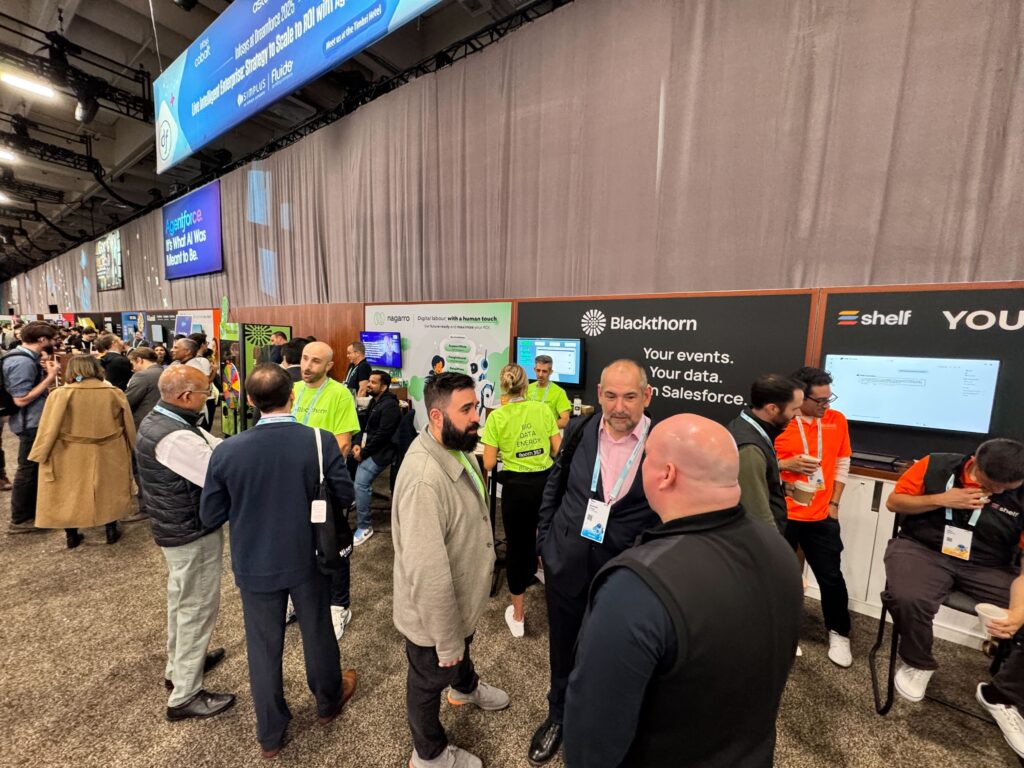
Attendees aren’t looking for more content. They’re looking for connection and clarity.
The biggest shifts:
- 74% say in-person events are the best way to evaluate solutions
- Networking remains the #1 driver of event satisfaction
- Hands-on, participatory formats outperform passive sessions
The fastest-growing shift across all sectors — corporate, higher ed, nonprofit, healthcare, financial services, and public sector — is the movement from passive attendance to active participation.
Interactive formats such as:
- Hands-on labs
- Peer roundtables
- Bring-your-data clinics
- Executive office hours
- Topic-match networking
- Real-time polls and Q&A
- Personalized SMS journeys
…aren’t just more engaging. They produce measurable impact:
- Higher participation → higher retention
- Real-time interaction → better data
- Human connection → stronger conversion
Interactive events don’t just “feel good” — they perform better.
Breakdown of these tactics:
6 Interactive Strategies to Improve Event ROI
What Event Industry Trends Mean for 2026 Event Teams
1. You need a portfolio, not a tentpole
Regional formats and micro-events are becoming dominant because they deliver better ROI.
2. You need proof, not just presence
Leadership cares about pipeline, deposits, donations, retention, and trust, not badge scans.
3. You need real-time personalization
SMS and AI-assisted content accelerate both engagement and follow-up.
4. You need a unified tech stack
Disconnected tools slow teams down and hide ROI. Consolidation is becoming standard.
5. You need accessible, compliant experiences
Accessibility, consent, and payments standards are strategic, not operational.
6. You need first-party data to stay competitive
Events are now your richest, most reliable source of owned data.
Want the Full Breakdown of Event Industry Trends for 2026?
This article covers the high-level trends, but the complete report includes:
✔ All nine “What’s Out / What’s In” event industry trend shifts
✔ Actionable plays for Corporate, Higher Ed, Nonprofit, Healthcare, Public Sector & Financial Services
✔ Measurement models for ROI across industries
✔ Real-world examples and event benchmarks
✔ How to execute each trend using Salesforce-native technology
👉 Download the full guide:
Event Industry Trends 2025–26: What’s Out, What’s In, and How to Stay Ahead
Ready to stop juggling tools and start running smarter events?
Schedule a demo and see how Blackthorn works inside Salesforce.