The attendee experience is the sum of all direct and indirect interactions a person has with your event — from the moment they first hear about it to the moment they leave (and beyond).
It encompasses everything: how speakers and exhibitors connect with attendees, what information is shared, how that information is delivered, and how well the event meets — or exceeds — individual expectations. It also accounts for how deeply each attendee needs to engage before they feel the event was worthwhile.
Every touchpoint matters. From the first event email to the final handshake, attendees are forming an impression — and that impression drives whether they return, refer others, or forget you entirely.
That cumulative experience — how they feel, what they remember, and whether they’d recommend you — is what event managers need to actively design, not just hope for.
A key event management principle: you can’t improve what you don’t understand. That means getting into the mindset of your participants — understanding their motivations, preferences, and what they’d consider a success. An attendee who came to close deals has different needs than one who came to learn. Designing for both requires intention.
Technology has also raised the bar. Attendees now have more choice than ever — which events to attend, which sessions to join, which speakers to follow before and after. That makes every interaction an opportunity to either build loyalty or lose it.
This article walks through what the attendee experience actually is, why it matters, and what you can do to improve it at every stage of your event.
Why does event attendee experience matter?
Organizations across industries spend significant budgets on events. To justify that investment, the event has to deliver — not just financially, but in terms of how attendees feel when they walk away.
According to Salesforce’s State of the Connected Customer report, 80% of customers say the experience a company provides is as important as its products or services. Events are one of the highest-touch brand interactions you have — which means the stakes are high in both directions.
When attendees have a great time, they re-engage with your brand, become loyal customers, and recommend your events to others. The reverse is also true. Attendees who feel let down are more likely to share that publicly — on social media, in peer communities, and in the reviews that future registrants will read before signing up.
That makes the quality of the attendee experience a direct driver of event ROI, not just a nice-to-have.
What affects attendee experience?
Running a standout event requires placing genuine emphasis on the quality of multiple, interconnected elements. Even one weak link — a confusing registration process, a venue with poor Wi-Fi, an irrelevant speaker — can overshadow everything else that went well.
The most important factors include:
- Organizer leadership: Clear communication and confident logistics set the tone for everything else.
- Venue: Poor layout, limited parking, or unreliable Wi-Fi can sour an otherwise great event before the first session begins.
- Registration process: A registration flow that’s slow or confusing creates friction before the event even starts.
- Speakers and presenters: Speaker quality, session structure, and relevance to attendee goals directly shape perceived value.
- Sponsors and exhibitors: The fit between sponsors and your audience matters. Irrelevant exhibitors erode trust.
- Food and beverage: Consistently underestimated, but a reliable driver of post-event commentary.
- Transportation and logistics: Anything that makes getting to or around the event harder will be noticed.
- Networking opportunities: For many attendees, the connections made are the primary reason they came.
- Technology and event apps: The tools you use for check-in, session selection, and communication reflect your organization’s professionalism.
- Programming content: Agenda design, breakout session topics, and the balance between depth and breadth shape how attendees feel about the time they invested.
Event managers should test different approaches across these components and track what drives results. Be sure to look at not just satisfaction scores, but downstream signals like re-registration rates, referrals, and social sharing.
Ways to improve attendee experience
Improving event quality has many layers — making it challenging to manage from beginning to end. What follows are practical tips organized by stage.
Before the event
Keep event information current and accessible. Agenda, speaker profiles, venue details, and FAQs should all be accurate and easy to find. Attendees who have to hunt for basic information start the event with lower confidence in your team.
Make registration straightforward. A well-designed registration process — with clear ticket options, easy payment, and personalized confirmations — signals that your organization is on top of it. For guidance on what to ask, see our guide on effective event registration questions.
Communicate proactively. Don’t wait for attendees to ask. Send reminders, logistics details, and pre-event content that helps them prepare and get excited. This matters especially for multi-day or complex-agenda events.
Use purpose-built event management software. The right tools let your team automate logistics and focus energy on content and experience delivery rather than chasing spreadsheets.
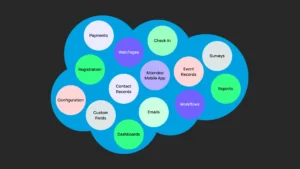
For example, you can manage and automate pre-event communication — confirmations, reminders, and personalized attendee details — directly inside Salesforce if you use Blackthorn Events. No third-party email tool required, and every interaction is logged on the contact record.
Define your goals before the event starts. It sounds obvious, but most teams skip this step or or set goals that are too vague to measure. Knowing what success looks like (registrations, session attendance, net promoter score, pipeline influenced) before the event gives you a clear baseline to work from and makes post-event reporting far more defensible.
If you can’t point to a number and say “we hit it” or “here’s why we didn’t,” the event’s impact stays invisible to leadership. For a practical framework, see our guide on setting SMART event goals to prove impact.
During the event
Nail the arrival experience. First impressions matter. Clear signage, a welcoming check-in area, and staff who know what they’re doing set the tone for everything that follows.
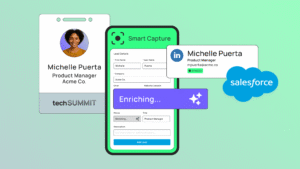
Reduce friction at check-in. Long lines and manual processes signal disorganization. Digital check-in — QR-code-based or badge scanning — moves people through faster and eliminates paperwork.
Provide live updates. Session changes, room assignments, and speaker updates should reach attendees in real time, whether through an event app, SMS, or onsite screens.
Facilitate networking. Don’t leave this to chance. Structured networking time, themed table discussions, and promoted offsite events give attendees the connections they came for.
Design intentionally for virtual and hybrid attendees. If your event includes a remote component, the digital experience deserves the same care as the in-person one. Stream quality, chat moderation, and virtual-only content all shape how remote participants perceive your event — and whether they’ll return.
With Blackthorn Events: Check-in runs off your live Salesforce data. Your team always has an accurate headcount, can see who’s arrived, and can pull up any attendee’s details without leaving the platform.
After the event
Collect attendee feedback promptly. Send a post-event survey within 24–48 hours while impressions are fresh. The data you get here is your clearest signal for what to improve. See our guide on how to create an attendee survey for a practical framework.
Hold a post-mortem with your team and stakeholders. Usually, this meeting takes place close to the event’s completion and includes speakers, sponsors, or other exhibitors who were at the event. Event managers can get insights on how to improve things for future events and not repeat mistakes made.
Review satisfaction data systematically. Look at wait times, session ratings, technology performance, and service quality. Patterns in the numbers reveal where your event is strong and where it isn’t.
Follow up with attendees. A thank-you message, a session recap, or a link to recordings keeps momentum going and reinforces the positive impression people left with.
With Blackthorn Events, post-event surveys and follow-up emails can be triggered automatically in Salesforce once an event closes — so engagement continues without manual effort from your team.
Ready to run events that people actually remember? Explore Blackthorn Events and see how it handles the full event lifecycle inside Salesforce.
What is the attendee experience?
The attendee experience is the sum of all interactions a person has with your event — from first learning about it, through registration, the event itself, and post-event follow-up. It encompasses logistics, content, networking, technology, and how well the event delivered on what attendees expected.
What is the most important factor in attendee experience?
No single factor dominates — but consistency across touchpoints matters most. An attendee who has a frustrating registration process, a smooth check-in, and a great session may still leave with a mixed impression. The goal is to minimize friction at every stage, not just optimize one part.
How do you measure attendee experience?
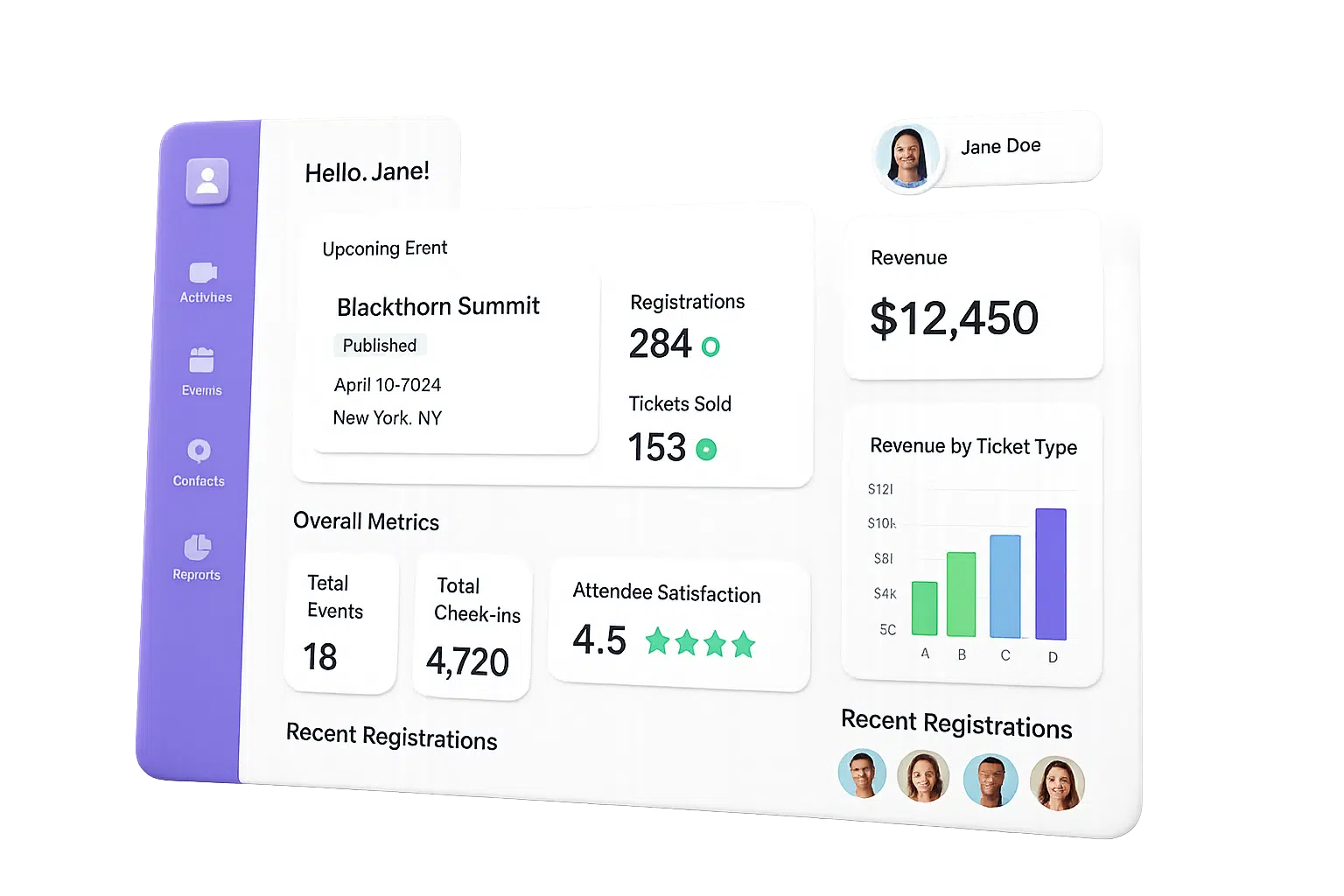
The most common methods are post-event surveys, session ratings, and net promoter score (NPS) tracking. Beyond direct feedback, re-registration rates, referral traffic, and social sharing are useful downstream signals. When your event data lives in a CRM like Salesforce, these metrics are easier to connect to broader business outcomes like pipeline and revenue.
Does Salesforce have event management capabilities?
Salesforce itself doesn’t include purpose-built event management out of the box. Blackthorn Events is a native Salesforce app that adds full event registration, check-in, payments, and post-event workflows directly on the platform. Because it’s built on Salesforce — not connected to it — all event data lives alongside your contact, account, and opportunity record
Ready to streamline your event planning and attendee management?
See how Blackthorn Events helps you run in-person, virtual, and hybrid events directly in Salesforce.